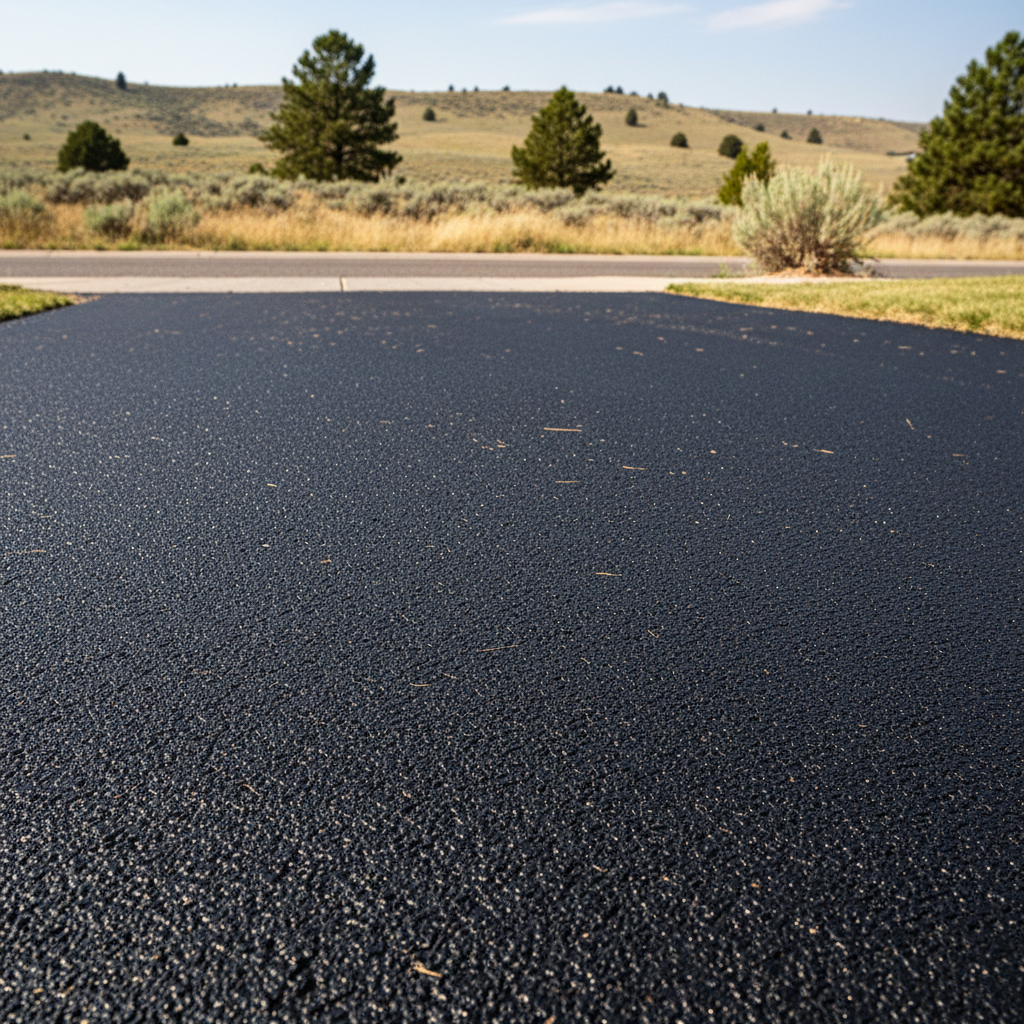
Your driveway takes a beating around here. Between the heavy clay soil shifting under the Foothills and those brutal 100-degree summer stretches followed by freezing winter nights, asphalt does not stay pristine on its own. If you have noticed your driveway looking faded, dry, and starting to shed small stones, it is time for a slurry coat. Before you buy supplies at the hardware store, we need to talk about what goes into this job, what you can realistically tackle yourself, and when it is time to hand it over to a professional.
What Even Is a Slurry Coat?
A slurry coat acts as heavy-duty sunscreen and moisturizer for your asphalt. It is a mix of asphalt emulsion, fine aggregate like washed sand, mineral fillers, and water. Boise Asphalt Creations sprays or squeegees this mixture across the surface to fill in hairline cracks, seal out moisture, and provide a fresh, dark black wear layer. The mixture is thicker than standard coal-tar sealer because of the sand content, which means it actually restores texture and traction instead of just painting the surface black.
Before the Project: Prep Work and Assessment
You cannot just put a slurry coat over a dirty, cracked driveway and hope for the best. Preparation is eighty percent of the battle, and this is where many DIYers run into trouble.
- Walk your driveway and check for structural cracks wider than a quarter-inch. Those need hot pour or cold patch before anything else happens.
- Pull weeds out of the edges near your landscaping.
- Degrease any oil spots left by your truck or lawnmower, otherwise the slurry will not bond properly.
If your driveway looks like a map of the Interstate with alligator cracking all over, a simple slurry coat will not cut it. You are looking at a full structural failure in those spots, and paving over it wastes money.
During the Application: The DIY Limit
Can you do this yourself? Technically, yes, if you buy buckets of driveway sealer from the big box store. But homeowners trying to apply a true slurry application on a full residential driveway face major challenges.
Slurry sets up fast, especially when the Boise sun is beating down on a 90-degree July afternoon. If you do not work quickly with a squeegee crew, you will end up with lap marks, ridges, and pooling in low spots. Boise Asphalt Creations uses specialized tanker trucks and calibrated spreader boxes to lay down an even, uniform thickness across the entire surface.
If you have a tiny parking pad or a short strip, you can rent a stiff broom and grab a few pails of commercial-grade sealer. But if you have a steep slope, a large multi-car garage approach, or severe oxidation, trying to DIY a slurry mix solo will leave you exhausted and regretting your Saturday.
After the Project: Curing and Maintenance
Once the coat is down, your job shifts to patience. Slurry needs time to cure properly before you drive your vehicles back onto it.
Keep foot traffic off the surface for at least 24 hours, and keep cars off it for a solid 48 to 72 hours. If you park your car on the driveway too early while the binder is still soft, you will pull up the fresh aggregate and leave permanent tire scuffs. Once the surface is fully cured, rinse it down occasionally to keep dirt from grinding into the new material, and keep an eye out for new cracks next spring after the winter freeze-thaw cycle finishes its work. For homes and businesses in Boise, Boise Asphalt Creations provides Asphalt Contractor services.