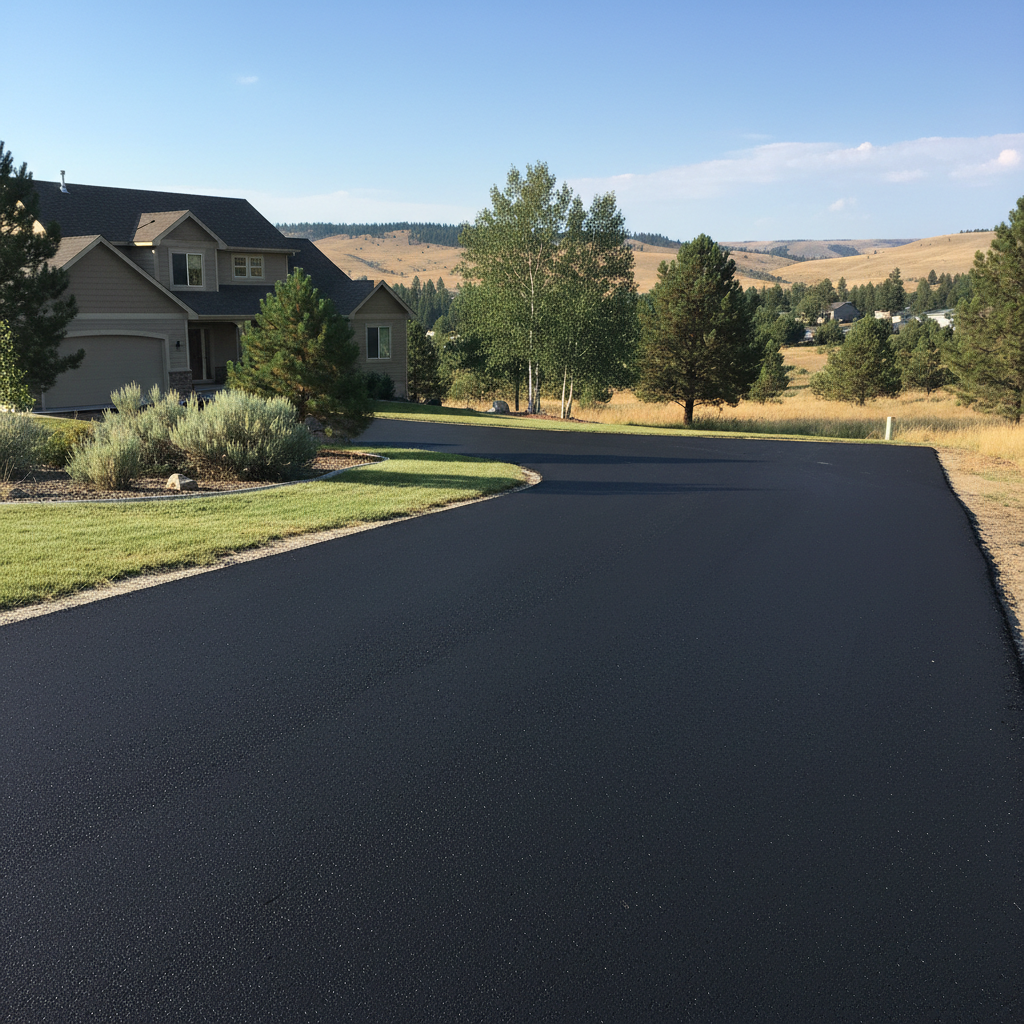
Think your driveway just takes care of itself? Not if you want it to last. I've been paving driveways in Boise for years, and I can tell you, a little bit of regular attention goes a long way. You wouldn't ignore your car's oil changes, right? Same deal with your asphalt.
Extend Your Driveway's Life: It's Easier Than You Think
The biggest thing you can do to make your driveway last is sealcoating. I can't stress this enough. Think of sealcoat like sunscreen for your asphalt. It protects against UV rays, which are brutal here in the summer, and it creates a barrier against water, oil, and gas. Without it, the sun bakes the binders out of the asphalt, making it brittle and prone to cracking. Then water gets in, freezes, expands, and boom – potholes. We recommend sealcoating every 2-3 years, depending on traffic and sun exposure. It's an investment that pays for itself by delaying much more expensive repairs.
Another big one is drainage. If water is pooling on your driveway, you've got a problem. Whether it's from rain, sprinklers, or melting snow, standing water will degrade your asphalt faster than almost anything else. Make sure your gutters are working, and if you see puddles that don't drain, that's a red flag. Sometimes it's as simple as cleaning out a clogged drain nearby, other times it might mean a small patch to redirect flow.
Finally, watch the weight. Heavy vehicles, like RVs or construction equipment, can put a lot of stress on residential driveways not designed for that kind of load. If you've got a buddy bringing over a huge trailer, try to have them park on the street if possible. It's just good practice.
Regular Maintenance You Can Do Yourself
Beyond sealcoating, there's a lot you can do to keep things in shape. First, keep it clean. Sweep off leaves, dirt, and debris regularly. Organic matter can hold moisture against the asphalt, and dirt can get ground into the surface, causing wear. If you spill oil or gas, clean it up immediately. Don't let it sit. A little kitty litter or absorbent material, then a scrub with a stiff brush and some dish soap, usually does the trick. Rinse it well afterwards.
Crack filling is another critical task. Small cracks are inevitable, especially with our freeze-thaw cycles here in Boise. But don't let them get big. As soon as you see a crack, fill it with a good quality crack filler. You can buy this at most hardware stores. It's a simple pour-and-spread job. This stops water from getting underneath the asphalt and eroding the base, which is where the real damage starts. If you let those cracks go, they'll turn into potholes, and then you're looking at a much bigger repair bill.
Trim back any tree roots that are growing under your driveway. Roots are strong, and they'll push up through the asphalt, causing bumps and cracks. It's a common issue in older neighborhoods with mature trees, like the North End.
Warning Signs You Shouldn't Ignore
You'll know when your driveway is telling you it needs help. Here are a few things to watch for:
- Lots of small, interconnected cracks: This is called 'alligator cracking' because it looks like alligator skin. It means the asphalt is failing from the top down, usually due to age, UV damage, or a weak base. It's a sign you need more than just crack filler; you're probably looking at a patch or an overlay.
- Potholes: These are obvious. They start as small cracks that let water in, then the freeze-thaw cycle and traffic break down the base. Don't wait on these; they only get bigger and more dangerous.
- Fading and discoloration: If your asphalt looks gray instead of black, it means the binder is oxidizing and losing its flexibility. This is a prime indicator that it's past time for sealcoating.
- Standing water: We talked about this, but it bears repeating. Any area where water consistently pools is going to be a problem spot.
- Edges crumbling: If the edges of your driveway are breaking off, it could be due to a lack of support underneath or just general deterioration.
When to Call a Professional
You can handle the small stuff, but there are times when you really need to call in the pros. If you're seeing widespread alligator cracking, multiple potholes, or large areas of crumbling asphalt, that's beyond a DIY fix. If your driveway has significant drainage issues that you can't solve with a simple cleanup, we need to look at the grading. If you're noticing your driveway is sinking or has major depressions, that indicates a problem with the sub-base, and that's definitely a job for us.
We, at Boise Asphalt Creations, are always happy to come out, take a look, and give you an honest assessment. Sometimes it's a simple repair, other times it might be time for a full resurface. We'll tell you what's going on and what your best options are. Don't let small problems turn into big, expensive ones. A little proactive care now saves you a lot of headache and money down the road.