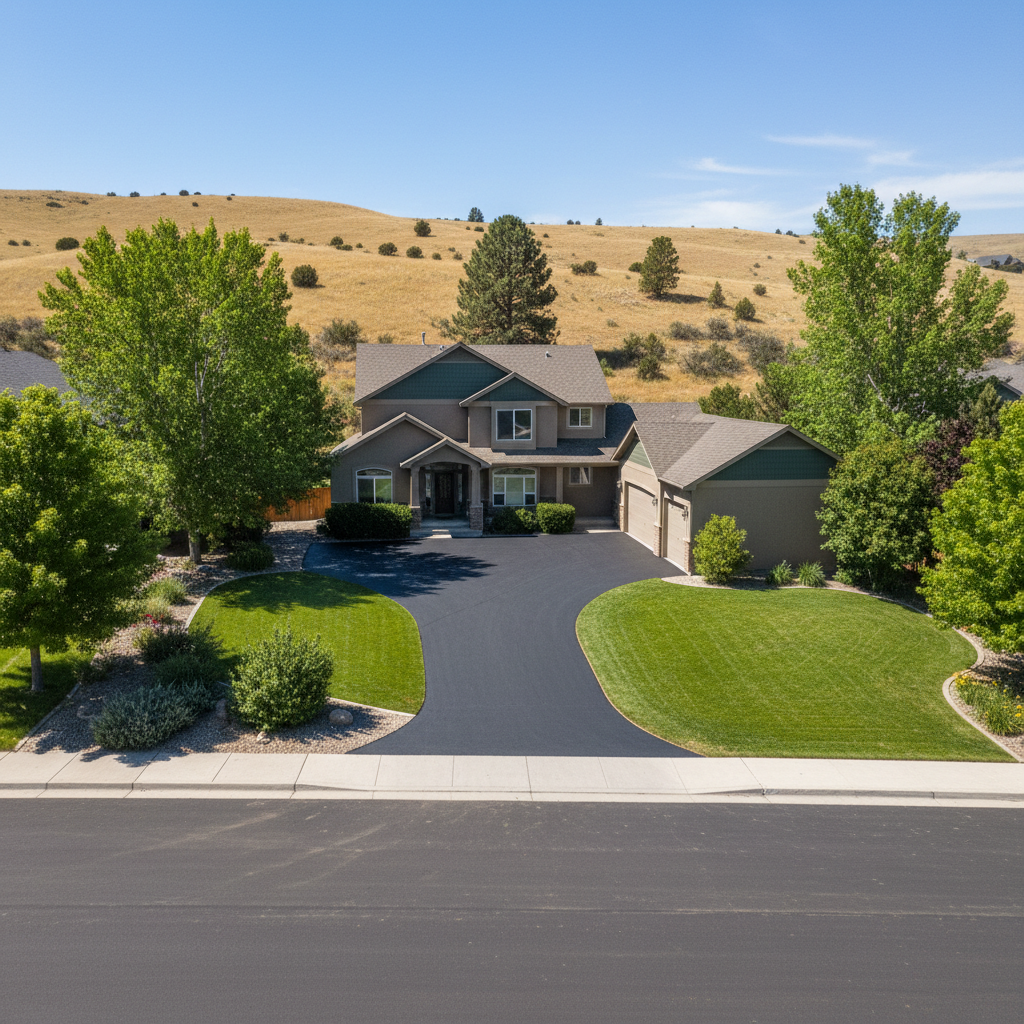
Ever wonder why some asphalt jobs around Boise look great for years, but others start cracking up after just a couple of seasons? It’s not always about the asphalt quality itself, though that’s certainly a big piece of the puzzle. A lot of it comes down to really understanding what our ground and weather here in the Treasure Valley do to pavement.
The Ground Beneath Our Feet: More Than Just Dirt
You might think dirt is dirt, right? But around Boise, we've got some pretty interesting soil conditions. Much of our ground is what we call 'expansive clay' or 'silty clay.' What does that mean for your driveway or parking lot, exactly? It means the ground moves. When it gets wet, it swells up. When it dries out, it shrinks. This constant expansion and contraction puts incredible stress on anything built on top of it, especially a rigid surface like asphalt.
If a paving contractor doesn't properly prepare the sub-base—that's the layer of gravel and compacted material under the asphalt—you're just asking for trouble. We've seen it happen countless times: a cheap bid often means cutting corners on the sub-base, and then you end up with alligator cracking or potholes forming way too soon. It’s like building a house on a shaky foundation. Doesn't matter how good your roof is if the walls are crumbling, does it?
Boise's Weather: Hot Summers, Cold Winters, Freeze-Thaw Cycles
Our climate here in Boise is another huge factor. We get those scorching hot summers, often hitting triple digits. That heat makes asphalt more pliable, almost like a thick liquid. If it's not properly compacted, or if heavy traffic rolls over it during those peak heat hours, it can rut or deform. Then winter comes. We get freezing temperatures, snow, and ice. Water seeps into tiny cracks, freezes, expands, and then thaws. This freeze-thaw cycle is a real killer for asphalt, widening those small cracks into major problems.
Think about a typical winter in the North End, with its older homes and mature trees. Those tree roots are already a challenge, but when you add in a few weeks of snow and ice melting, then refreezing, it really puts the pavement to the test. You need a paving mix that's designed to handle these extremes, and proper drainage? Absolutely critical. If water can't get away, it's just going to sit there and do damage.
Common Projects & Why Local Expertise Matters
We work on all sorts of projects here at Boise Asphalt Creations. Everything from new driveways in growing communities like Star or Eagle, to resurfacing parking lots for businesses downtown, or even patching up private roads in places like the Boise Foothills. Each one has its own set of challenges, but the underlying principles of good paving remain the same.
For new construction, especially in newer developments where the ground might have been heavily disturbed, we really focus on getting that sub-base right. For existing properties, it's often about assessing the damage and figuring out if a simple overlay will do the trick, or if we need to dig out and rebuild sections. Sometimes, you'll see a lot of patching on older parking lots near the Boise Towne Square mall. That's usually a sign of years of wear and tear, and often, a sub-base that's finally giving up the ghost.
Why does local expertise matter so much? Because we've seen it all. We know the soil types specific to different parts of Ada County. We understand how our local aggregate performs. We know which asphalt mixes stand up best to our particular brand of summer heat and winter freeze. A contractor from out of state, or even from the other side of the country, might have great general paving knowledge, but they won't have that intimate understanding of Boise's unique conditions. They won't know that a certain type of clay soil near the Boise River needs extra attention, or that a south-facing driveway in the Bench neighborhood gets hammered by the sun way more than one in the shade of the Foothills.
When you're investing in asphalt, you're not just buying a surface. You're buying a long-term solution to a fundamental need. And for that, you need someone who knows the ground you stand on, literally.